
Purpose
The purpose of this article is to answer any questions for which the answers are not found in the 'Deep Dive' or 'How-To' articles also located in this knowledge base. If you are looking for guidance on standard use of the UK Individual check, refer to these articles for assistance.
If your query is not covered by these, then please see below for common questions with their solutions.
1. What does "Refer1, Refer2, Pass" mean?
On occasion, you may find that when you run a UK Individual check, you will get a "Pass" overall, but see just below the green box a section that looks as below:
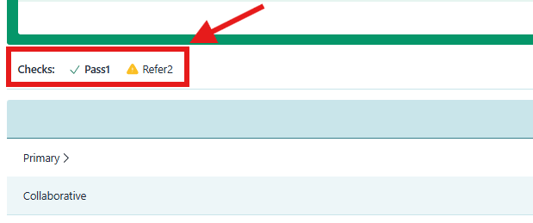
This is a result of our award-winning triple bureau process that checks the databases of our three partner credit reference agencies, Experian, Equifax and TransUnion. When the result shows this, it means that, since insufficient data was found in the first database, this is then passed through to a second, and a third if applicable. If the result includes a Pass from any of the CRAs, this means sufficient data was found to verify the individual. The refers reflect where earlier CRAs didn’t hold enough data, not a failure of the overall verification.
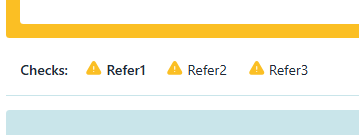
If you see "Refer1, Refer2, Refer3" as above, this means that not enough data was found by any of our CRA partners to verify the individual, and further methods of verification are required, such as our SmartDoc ID verification.
Important note: This is the intended operation of our triple-bureau system, to give you the highest possible pass rate. Each CRA check is billed individually, so if 2 CRAs are checked, 2 credits are used, and 3 for 3 CRAs etc.
2. Does "Collaborative Data" affect the search result?
You may notice on the results page of a UK Individual search that, just below the Primary Data section (which shows how many data points were found to verify the individual's current address), is a field called "Collaborative Data". This refers to past or present agreements found at a previous address if you've chosen this option upon input.

If you have not input a previous address, this will always equal zero. However, if you have input the previous address, this will display the number of data points that link this individual to the previous address. It's important to be aware that collaborative Data is supporting information only. It helps provide a broader picture of an individual’s historical footprint but does not usually influence the overall pass outcome. In limited scenarios, certain data partners may use wider address‑related insights as part of their internal matching logic, but this is not a primary driver of the result and is not something clients need to action.
3. Date of Birth Not Found on CAIS
The "Date of Birth" field on the UK individual results page shows the number of primary data sources that also contain a date of birth that matches the input field. If you did not input a date of birth, this will display as "N/A".
However, if a date of birth was provided, then you may also receive a "Fail" in this field, meaning a mismatch was found, or alternatively a "Not Found On CAIS" message is displayed when none of the agreements found contain date of birth information. This can occur alongside a pass if sources found were Voter's Roll, or some other documentation with no date of birth requirement.
4. What does failing a potential fraud alert mean?
The potential fraud alert gives an indication of whether suspicious activity that indicates fraud is found related to the address given.
More specifically, this check looks for mail drop, forwarding and accommodation address files, and if any of these are found, the search will return a "Fail" in the fraud alert field. This does not affect the overall pass, and may warrant further investigation, depending on your internal risk and compliance policies.