

Customer Due Diligence (CDD) Checks & Risk Assessment Software
What we do
What is Customer Due Diligence and what is its objective?
Customer due diligence (CDD) involves verifying a customer's identity through personal details like name, photograph, address, and date of birth, usually by accessing documents such as passports, driving licenses, or utility bills.
Customer due diligence (CDD) involves verifying a customer's identity through personal details like name, photograph, address, and date of ...
What CDD checks are needed for a business?
To carry out customer due diligence for a business, you’ll need to check the company is registered with Companies House, and identify any persons of significant control (PSCs). You’ll also need to find out if there are any ultimate beneficial owners, as well as look at the company's annual returns and statements.
To carry out customer due diligence for a business, you’ll need to check the company is registered with Companies House, and identify any ...
When is CDD required?
Customer due diligence is required at the onboarding stage, when your firm is in the process of bringing in a new customer. Every firm that’s subject to money laundering regulations should be performing CDD as part of their risk-based approach to AML.
Customer due diligence is required at the onboarding stage, when your firm is in the process of bringing in a new customer. Every firm ...
How are CDD checks performed?
Most firms still complete their customer due diligence manually. This involves checking physical ID documents to verify the person’s name, address and date of birth, and then checking that person’s details against sanctions and PEP lists.
Most firms still complete their customer due diligence manually. This involves checking physical ID documents to verify the person’s name, ...
What Is Customer Due Diligence?
Customer Due Diligence, or CDD, verifies a customer or business, establishes the purpose of the relationship, and assesses financial crime risk. It uses the customer’s risk level to determine which checks and level of scrutiny are required.
CDD can combine KYC checks for individuals, KYB checks for businesses, and wider AML checks to:
- Verify identities, addresses and company information
- Identify beneficial owners and associated individuals
- Understand the purpose of the relationship
- Screen for sanctions, PEPs and other risks
- Apply proportionate checks or enhanced due diligence
- Keep information and risk assessments under ongoing review
What is the difference between CDD and KYC processes?
KYC covers the initial checks used to confirm a customer’s identity before or during onboarding. It provides the verification foundation for the wider Customer Due Diligence process.
CDD goes a step further by establishing the purpose of the relationship, assessing the customer’s financial-crime risk and determining which checks should be applied. It can include sanctions and PEP screening, enhanced due diligence, escalation and ongoing monitoring.
So, in a nutshell:
- KYC confirms who the customer is.
- CDD uses that information to assess and manage risk throughout the relationship.
KYC therefore forms part of CDD, rather than being a separate or interchangeable process.
How Customer Due Diligence Works
Assess Customer Risk Consistently
Build a clear customer risk profile using the information collected during onboarding and throughout the relationship. SmartSearch helps compliance teams assess relevant risk factors consistently, apply the appropriate level of due diligence, and maintain evidence of every decision.
What is a risk based approach to Customer Due Diligence?
Customer due diligence is required at the onboarding stage when your firm is bringing in a new customer. Every firm subject to money laundering regulations should perform CDD as part of their risk-based approach to AML. This not only includes all businesses in the financial services sector but also:
To effectively implement a risk-based approach, consider the following steps:
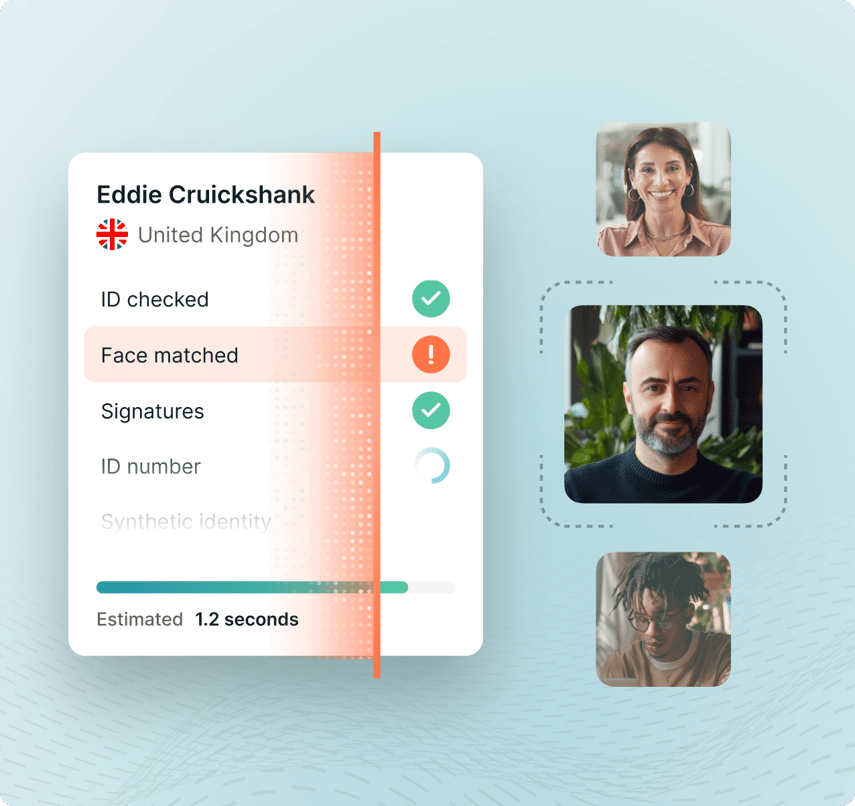
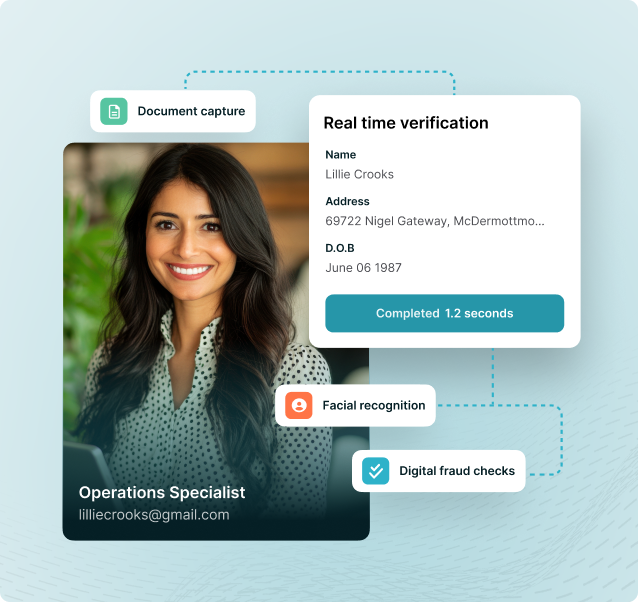
Begin by evaluating your firm's overall risk profile. This assessment should be detailed and reflect the unique characteristics of your business activities. Step 1: Verify Customer IdentitiesValidate your customer’s full name, residential address, and date of birth. Capture and confirm their photo identity against government-issued documents such as a passport or driving licence. Leveraging tools like identity and document verification, as well as facial recognition, can help streamline and automate this crucial first step.
Based on your risk assessment, determine the extent and depth of CDD required for each client. For higher-risk cases, more detailed information and verification steps will be necessary. Step 2: Screen Against Prohibited ListsCheck whether your client appears on Politically Exposed Persons (PEPs), sanctions, or fraud watchlists. Incorporating automated screening solutions helps ensure that no critical checks are missed and makes the process more efficient.
It's essential to maintain thorough documentation.This includes detailed records of your risk analysis and written policies outlining how your firm applies AML requirements to different risk levels. Step 3: Assess and Monitor RiskMake informed, risk-based decisions about each client by combining your CDD findings with other relevant insights. For higher-risk clients, ongoing monitoring and enhanced due diligence may be required. Access to consultancy services can help you develop a robust view of client risk and automate decision-making where appropriate.
By following these steps, your firm can not only meet regulatory requirements but also create a robust defence against potential money laundering activities. This approach ensures that CDD processes are not only comprehensive but also adaptable to the varying levels of risk presented by different clients.
Understanding the different levels of Customer Due Diligence
Streamlining Customer Due Diligence with SmartSearch
With SmartSearch, your Customer Due Diligence (CDD) process becomes a streamlined, efficient experience. Our advanced platform automates the identification and verification of customer information, ensuring compliance with AML regulations. By accessing a wide range of reliable data sources, including passports, driving licenses, and utility bills, SmartSearch helps you quickly and accurately verify customer identities, reducing risk and saving valuable time..
The Power of Automated Simplicity
Automating the majority of initial CDD checks not only accelerates the process but also helps pinpoint high-risk cases that require further investigation. This approach saves you time, reduces operational costs, and minimizes the risk of human error—allowing your teams to focus on more value-added tasks.
For low-risk customers, SmartSearch slashes processing times from hours to near real-time, enabling you to meet client expectations and engage them before competitors can. The result: better conversion rates, smoother onboarding, and a seamless journey for both your business and your customers.
There’s a reason over 7,000 clients put their trust in us
The onboarding process has allowed us to enhance our user experience, whilst improving compliance oversight without the need for manual intervention.
Audit & Compliance Manager, Acasta Europe Limited
The ease and efficiency of the AML checks made SmartSearch really stand out. We were particularly impressed with the automatic reporting feature that instantly downloaded to the back-office system to deliver a full audit-trail of our clients.
Arena Investment Management
The SmartSearch system is easily accessible and very user-friendly. Customer service is excellent and any queries are met with a very quick and knowledgeable response.
Karen Hogan, Thorntons InvestmentsServing professional AML regulated industries
Trusted by over 7,000 regulated businesses, SmartSearch's next-generation technology is the UK's leading solution for AML and risk management.
Strengthen legal client onboarding with CDD
- Verify clients, businesses and beneficial owners
- Understand the purpose of each matter
- Screen for sanctions, PEPs and adverse media
- Review Source of Funds where required
- Retain risk assessments and approval records
Simplify CDD for accountancy clients
- Complete KYC and KYB verification
- Identify UBOs and ownership structures
- Assess client and engagement risk
- Escalate higher-risk cases for EDD
- Monitor changes throughout the relationship
CDD checks for property transactions
- Verify individuals and businesses
- Review Source of Funds evidence
- Screen for sanctions and PEP exposure
- Assess property transaction risk
- Maintain a complete compliance audit trail
Risk-based CDD for financial services
-
Automate KYC and KYB checks
-
Apply configurable customer risk scoring
-
Screen for sanctions, PEPs and adverse media
-
Escalate higher-risk customers for EDD
- Manage ongoing reviews and monitoring
Strengthen investor due diligence
-
Verify individual and corporate investors
- Review Source of Funds and Source of Wealth
- Assess geographic and ownership risk
- Apply Enhanced Due Diligence where needed
- Record approvals and review decisions
CDD checks for Insurance firms
-
Verify identities and supporting documents
-
Assess customer and relationship risk
- Detect potential identity or document fraud
- Screen for sanctions and PEP exposure
- Retain evidence of checks and decisions
CDD for safer gaming relationships
Verify players, assess expected activity, and apply additional due diligence where customer behaviour or funding creates greater risk.
-
Verify identity, address, and age information
-
Complete document and biometric checks
-
Assess player and transaction risk
- Review Source of Funds where appropriate
- Monitor changes in customer behaviour
Comprehensive CDD for banking
-
Verify individuals and businesses
-
Assess account-opening and customer risk
-
Screen for sanctions, PEPs and adverse media
- Escalate complex or higher-risk cases
- Maintain ongoing reviews and audit trails
CDD for cryptocurrency
-
Complete global KYC and KYB verification
-
Validate documents and biometric evidence
-
Assess geographic and customer risk
- Apply EDD to higher-risk relationships
- Monitor changes in risk and activity
CDD for property development
Verify buyers, investors, contractors, and commercial partners while assessing ownership, funding, and relationship risk.
-
Verify individuals and corporate entities
-
Identify beneficial owners and controllers
- Review Source of Funds evidence
- Screen associated individuals and businesses
-
Retain risk assessments and approval records
Customer Due Diligence procedures are a core element of anti-money laundering regulations
The help you need, when you need it
Whether you’re a small business just getting to grips with AML regulations or a large corporation with plenty of experience in compliance, SmartSearch can help you to comply with regulations, fight financial crime and grow your business with confidence.
-
Resource library
Explore our resource library for expert guides and tools to support your compliance processes.
-
Blogs
Discover our latest blog posts for expert tips, features, industry trends and more.
-
See it in action
Let one of our highly-trained sales team demonstrate the multi-award winning SmartSearch AML product.
Frequently Asked Questions
CDD should be conducted at the start of a business relationship and periodically reviewed. The frequency of reviews depends on the customer's risk level; high-risk customers require more frequent and thorough reviews compared to low-risk customers.
Enhanced Due Diligence (EDD) is an extended version of CDD, applied to high-risk customers. It involves more rigorous checks, ongoing monitoring, and a deeper understanding of the customer's activities to mitigate potential risks.
Non-compliance with CDD requirements can lead to severe penalties, including fines, reputational damage, and potential legal action. It can also result in regulatory scrutiny and loss of business opportunities related to trust and credibility.
You must retain records of Customer Due Diligence (CDD) documents and related evidence for a period of five years after the conclusion of a business relationship or a one-time transaction.
Customer Due Diligence, or CDD, is the process of verifying a customer or business, understanding the purpose of the relationship, and assessing the risk of money laundering or other financial crime. The findings determine the checks, approvals, and monitoring required.
A CDD check can include identity and address verification, company and beneficial ownership checks, sanctions and PEP screening, understanding the purpose of the relationship, reviewing Source of Funds, and completing a customer risk assessment. The exact checks should reflect the level of risk identified.
A risk-based approach varies the depth and frequency of checks according to the risk presented by each relationship. Lower-risk customers may follow a more proportionate process, while higher-risk cases require additional evidence, approval, and monitoring.
KYC provides the identity-verification foundation by confirming who an individual customer is. CDD is the wider risk-based workflow that uses this information alongside screening, relationship details, risk assessment, and ongoing monitoring. KYC therefore forms part of CDD.
CDD should be completed when establishing a new customer or business relationship. Further checks may also be required when circumstances change, information appears inconsistent, unusual activity is identified or the customer’s risk profile increases.
An incomplete or inconclusive result should be referred for further review rather than automatically approved. The business may need to confirm the information supplied, request additional evidence, complete document or biometric checks, reassess the risk, and apply Enhanced Due Diligence where appropriate.