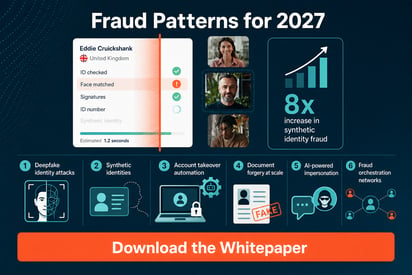
Six fraud patterns UK-regulated firms will be measured against in 2027
- Anti-Money Laundering (AML)
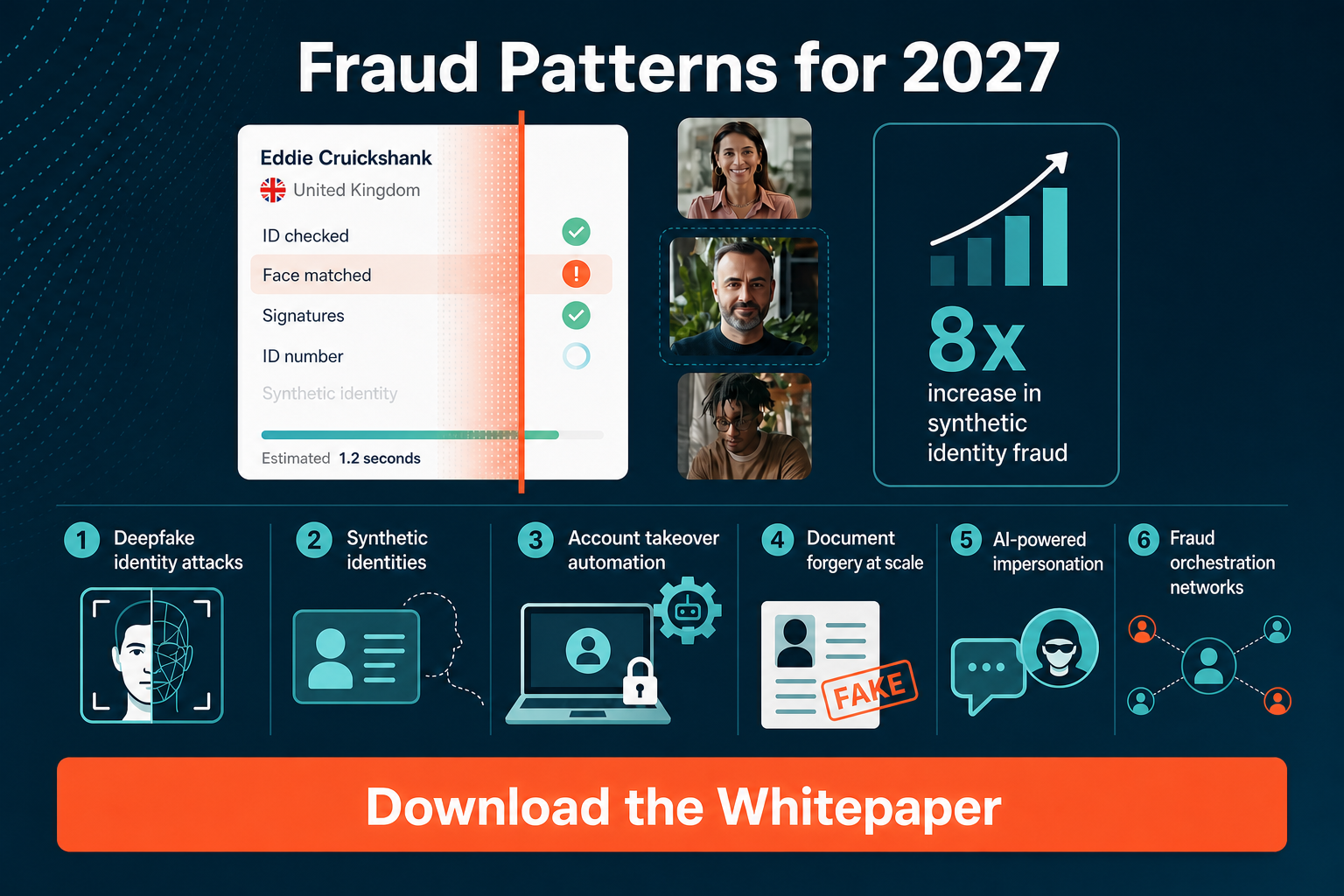
Our new whitepaper, The Trust Economy, sets out six specific fraud patterns our research and the broader industry data suggest will shape compliance decisions through 2027 and into 2028.
The plural wave of deepfake fraud cases. The Arup $25 million case became the industry’s reference point in 2024, but 2027 will produce smaller, more targeted cases landing across sectors rather than one or two headline incidents. UK Finance’s Annual Fraud Report 2026 identifies AI-powered tools, including deepfakes, voice cloning and synthetic identities, as accelerating threats across every sector of UK financial services. The reference-point case becomes the drumbeat.
The synthetic identity detection gap. Synthetic identity fraud increased eightfold globally in 2025 compared with 2024. Our 2026 Compliance Reality Check found 24% of UK regulated firms already identify AI-generated fraud as their biggest emerging threat, but 54% are still conducting identity verification manually. The gap between threat awareness and operational capability is widening.
The enforcement signal from the Budget and the Fraud Strategy. The Autumn Budget confirmed expanded HMRC compliance powers. The Fraud Strategy 2026 to 2029 commits over £250 million to a sector-wide response. The National Crime Agency’s Operation Machinize produced over 950 arrests and £13 million in seized criminal proceeds through 2025. The signal is clear: enforcement capacity is being resourced, and firms will be measured against the standard that signal is setting.
The operational perimeter matters more than the regulatory response. The UK fraud economy operates at industrial scale. The criminal justice system was built to prosecute one fraud at a time. The average fraud case now takes 626 days to reach charge, compared with 80 days for the average criminal case, and fraud prosecutions have fallen 56% since 2015. The firms that will be well-defended in 2027 will not be the ones that waited for the Government to catch up with the threat.
Reusable digital identity moves from pilot to competitive advantage. The UK Digital Identity and Attributes Trust Framework, HM Land Registry Safe Harbour, bank-backed identity and technology wallets are all pulling the market toward reusable credentials. Credas’s DIATF-certified digital identity verification is already involved in approximately 60% of UK housing transactions. The firms with the orchestration layer to accept multiple identity sources will be positioned for the Open Finance world. The firms without it will be rebuilding when they should be competing.
Trust fatigue becomes a commercial challenge for legitimate firms. Consumer trust in digital communications is actively eroding. Phishing emails impersonate trusted organisations. Text messages mimic financial institutions. Fraudsters spoof phone numbers. The result is a dangerous paradox: real fraud alerts may appear illegitimate, while fake alerts appear authentic. 56% of consumers are already very or extremely concerned about AI-enabled scams. In 2027, legitimate businesses will increasingly struggle to break through the noise to their own customers.
Each of these is a specific pattern. Together they define the environment UK regulated firms will be operating against. The firms that treat 2027 as the year to shift their verification approach from compliance task to trust capability will find themselves with a measurable commercial advantage. The firms that do not will find themselves spending more on compliance to carry more risk, at precisely the moment the economic environment makes that harder to defend.
Download The Trust Economy whitepaper for the six patterns in detail, the research behind them and what they mean for your firm.
See it in action
Get in touch with our team of experts today to discuss your business requirements and how SmartSearch can help with a bespoke solution.